
Making the Open Agile Architecture "Actionable" to enable Effective Decision-Making
Putting into Practice the 'Strategic and Data-Driven Agile Value Delivery'
Patterns for a Data-Driven VALUE-DELIVERY Organization - From Goals to Actionable Insights...
TOGAF, UAF / NAF v4, ArchiMate 3 Training and Consultancy - Last recommendations from end customers
A few pictures from our NATO Architecture Framework NAFv4, TOGAF & ArchiMate sessions ...
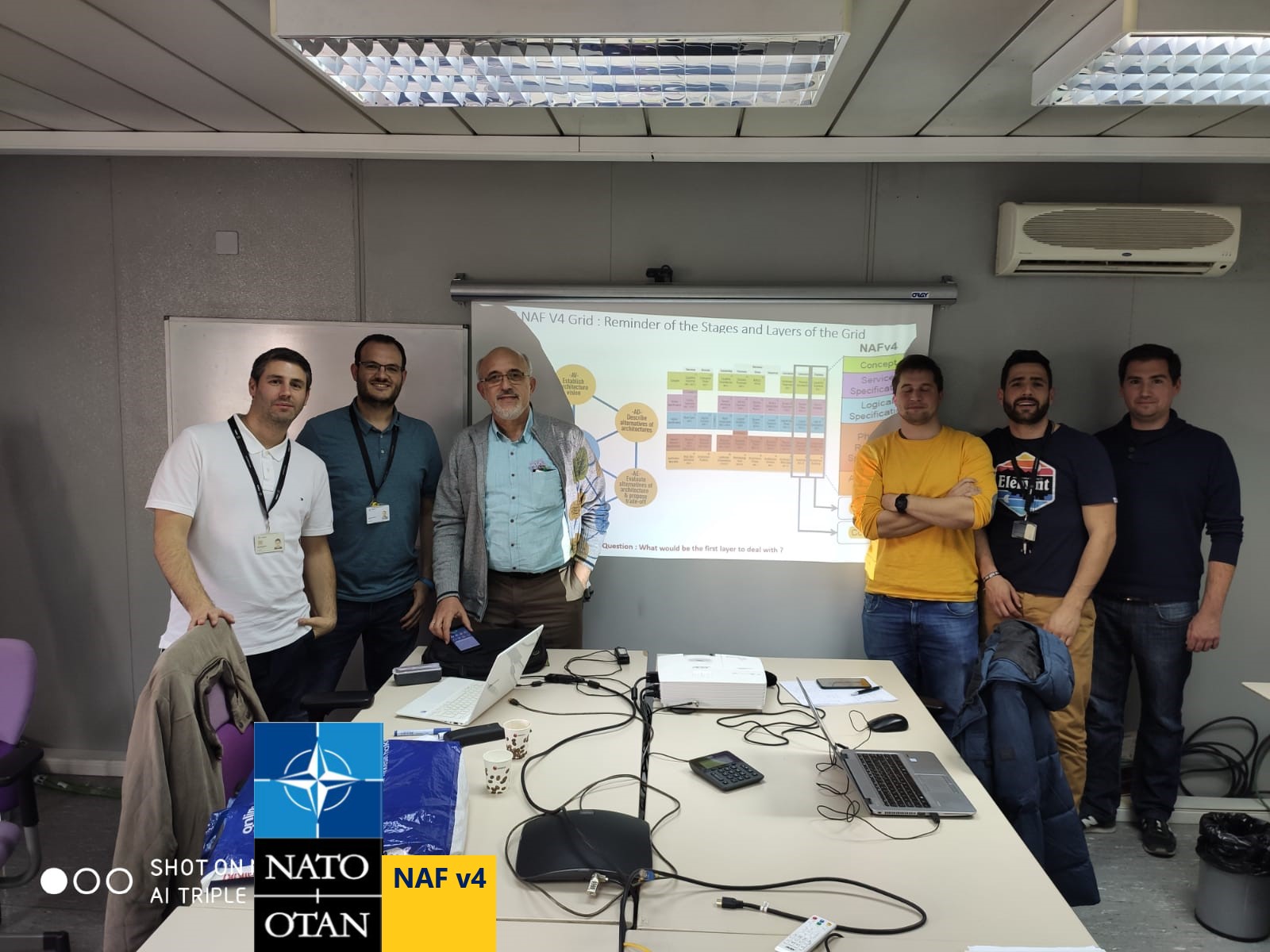
From our NATO NAFv4 session for System Architects / Engineers at Indra Sistemas in Madrid - Feb 2022...
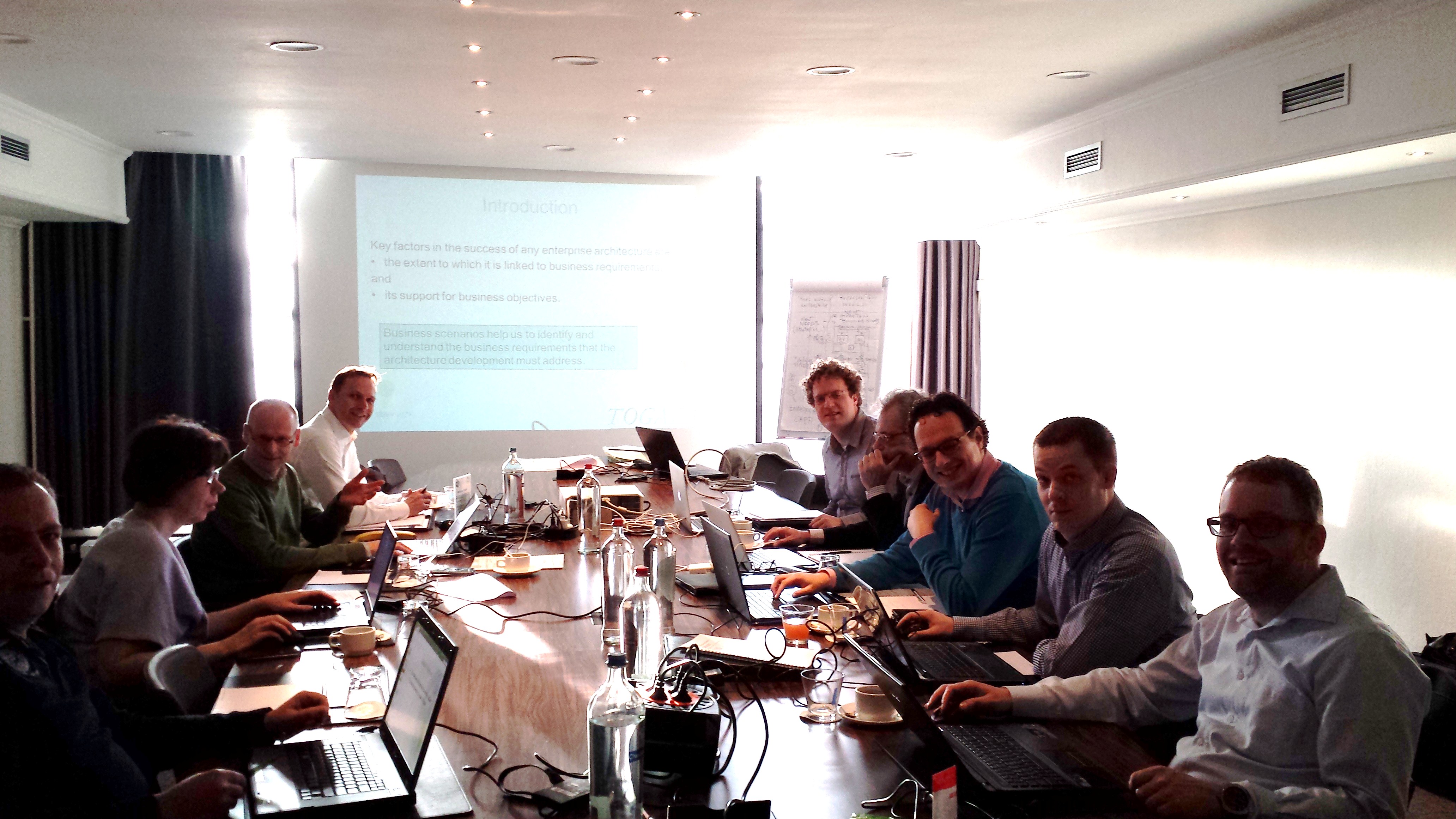
From our special TOGAF session for APG Asset Management in Amsterdam - February 2018...
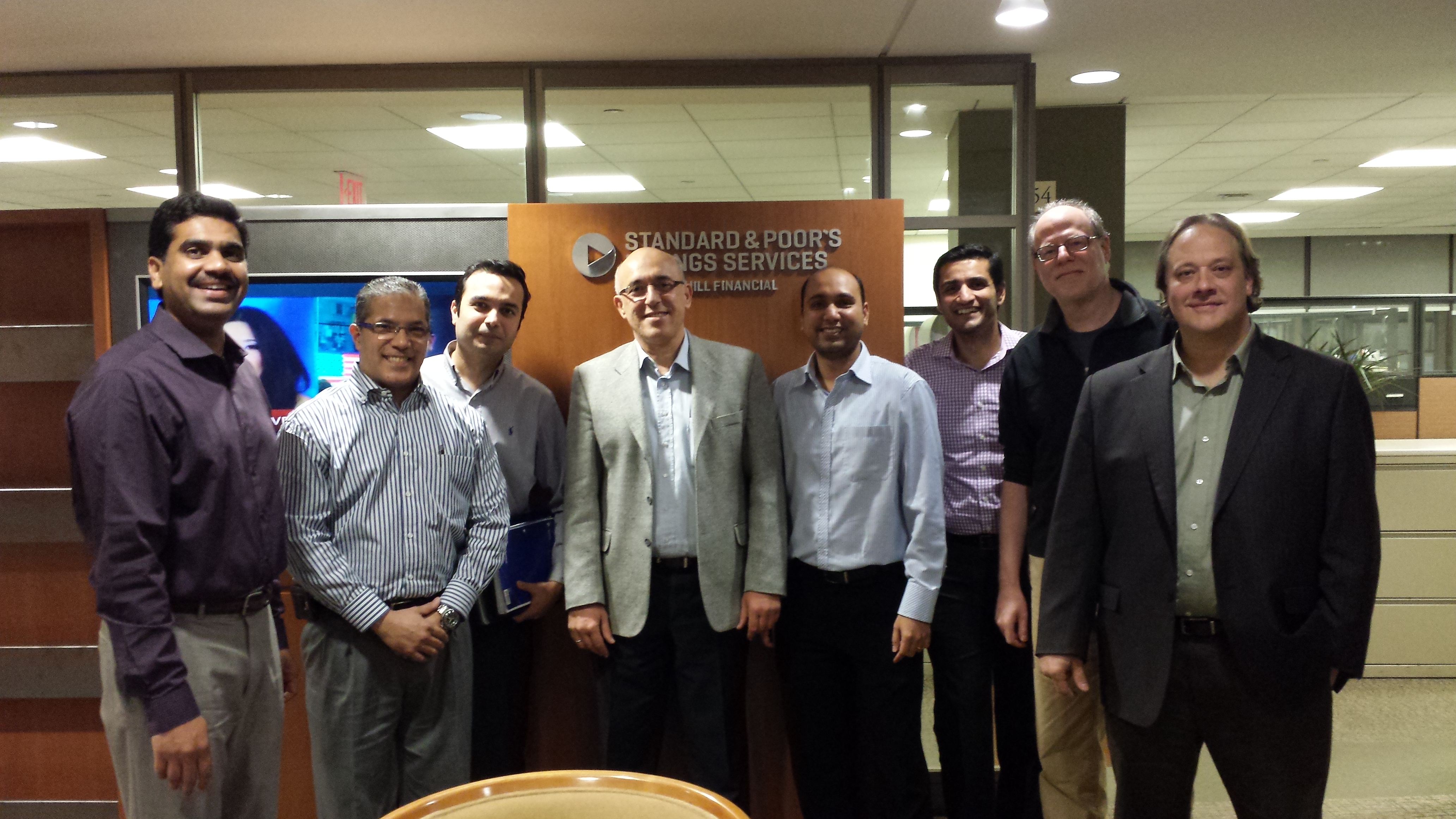
From our ArchiMate integrated TOGAF in-house session at S&P in New York- December 2015...
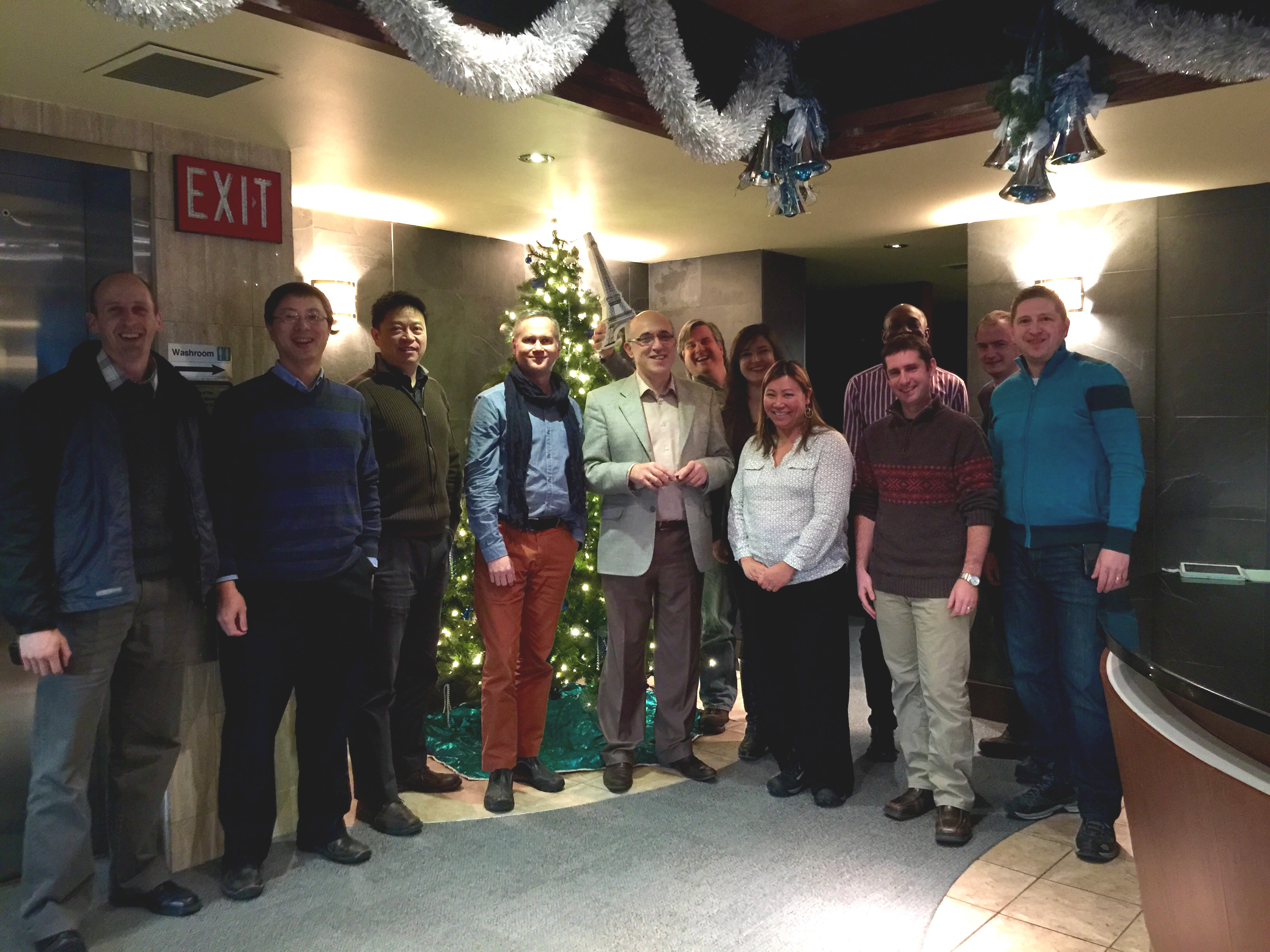
From our TOGAF class in Ottawa - November 2014...
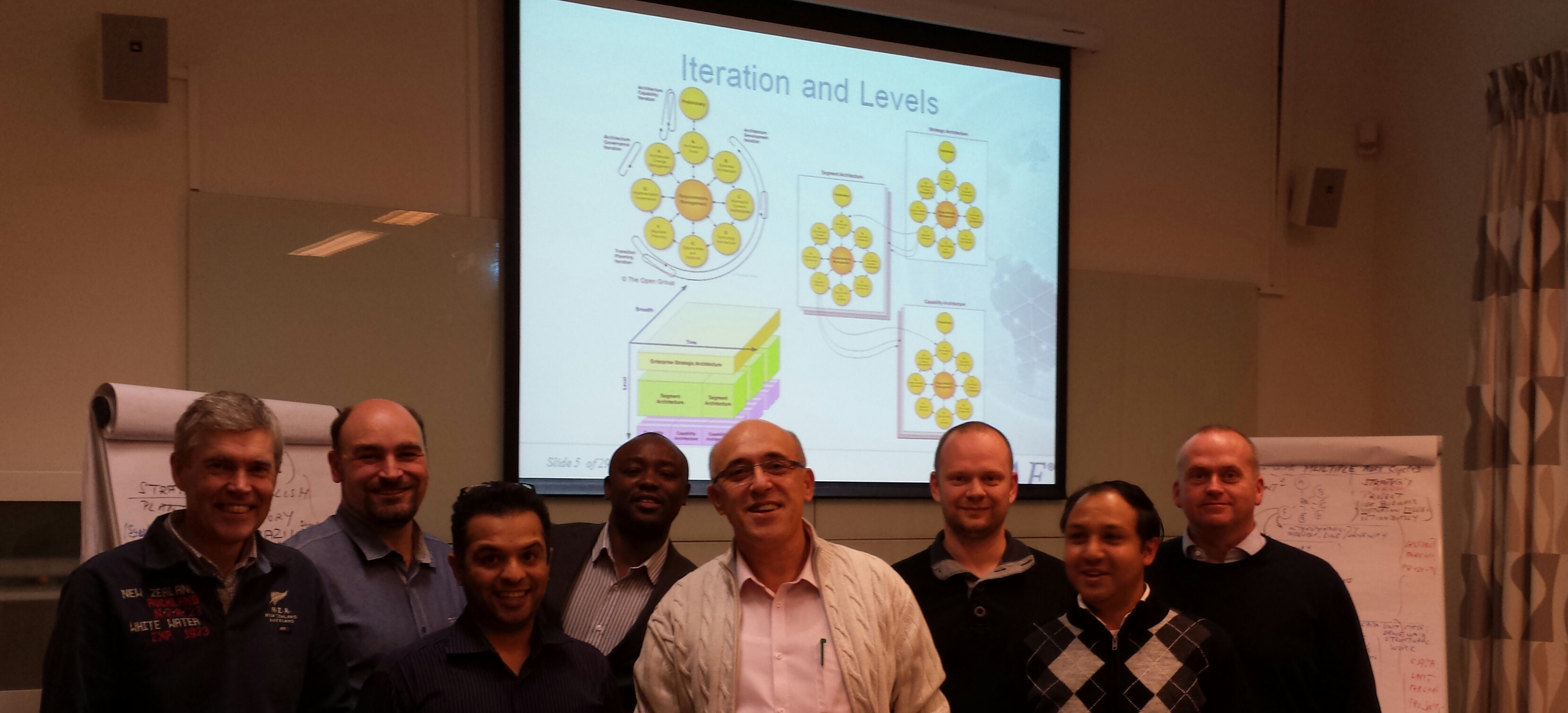
Our TOGAF class photo in Stockholm - October 2014...
From our TOGAF class in Toronto - September 2013... ...
...
Training / Mentoring Services to help you turn disruptions of your digital business landscape into opportunities and align your Business / IT System
White Papers on the usage of TOGAF, Archimate, BPM, UML, SysML, BMM and SOA...
Open Group's Paris Conference Oct. 2016 - Sustainable Value Delivery - From Strategies to Implementation
Part 1 available here on LinkedIn
Using TOGAF and ArchiMate to align IT / SOA with Changing Strategies and Capabilities (Extended Version April 2014)
-Agile and Smart Modeling with UML and SysML
Free Webinar : Leveraging Business Agility - Designing your Enterprise Architecture using TOGAF and ArchiMate in Practice
JOT- November/December 2008
From BMM to SOA...(last updated Sept. 2011)
Sparx Systems
The Goal-Driven SOA Process on a case study
JOT- July 2006
Applying the "Goal Driven Development" Process using UML2
Unisys
/ US Justice System
Platform independent model-based framework for exchanging information in the US Justice System
OMG- 2004 Athens
Aligning IT with the changes using MDA
EU-2005 ICT4
Applying GDDP on e-government Life Cycle
more ...
Partners & End Customers
-
-
Architecture Center Ashtech
Atos
Crédit Agricole
EADS
European Commission
France Telecom (Orange)
Giunti Labs
iCMG
Indra Sistemas
Nobleprog
Northrop Grunmann
Object Management Group
Snecma
Société Générale
Sogeti
Sparx Systems
Standard & Poors
ST Microelectronics
Thalès
The Open Group
UEM
Valtech
Contact mail : birol.berkem@goobiz.com
Building the AI-Enabled Agile and Digital Enterprise
Making the Agile Enterprise "Sense the Change" and "Act upon it Rapidly and Decisively"

True enterprise agility isn't about ditching EA structure—it’s about making it dynamic.
At the heart of this challenge is the Open Group’s Open Agile Architecture (O-AA) standard. Designed for rapid value delivery, O-AA aligns an enterprise’s products, services, and day-to-day operations with strategic goals and customer expectations.
However, turning this standard into an active, operational engine requires execution. By modeling O-AA principles through TOGAF ADM and ArchiMate, and deploying them onto an Agentic AI platform powered by continuous PDCA cycles, the blueprint comes alive. This unified framework streamlines end-to-end strategic value creation, enabling your enterprise to adapt to market changes instantly and seamlessly.
 Read more
  last updated 14.08.2026
NAF v4.1 - NATO Architecture Framework Version 4 (including its latest 4.1 edition)
Aligning Human and Physical Resources to the Enterprise Vision and Changing Landscape
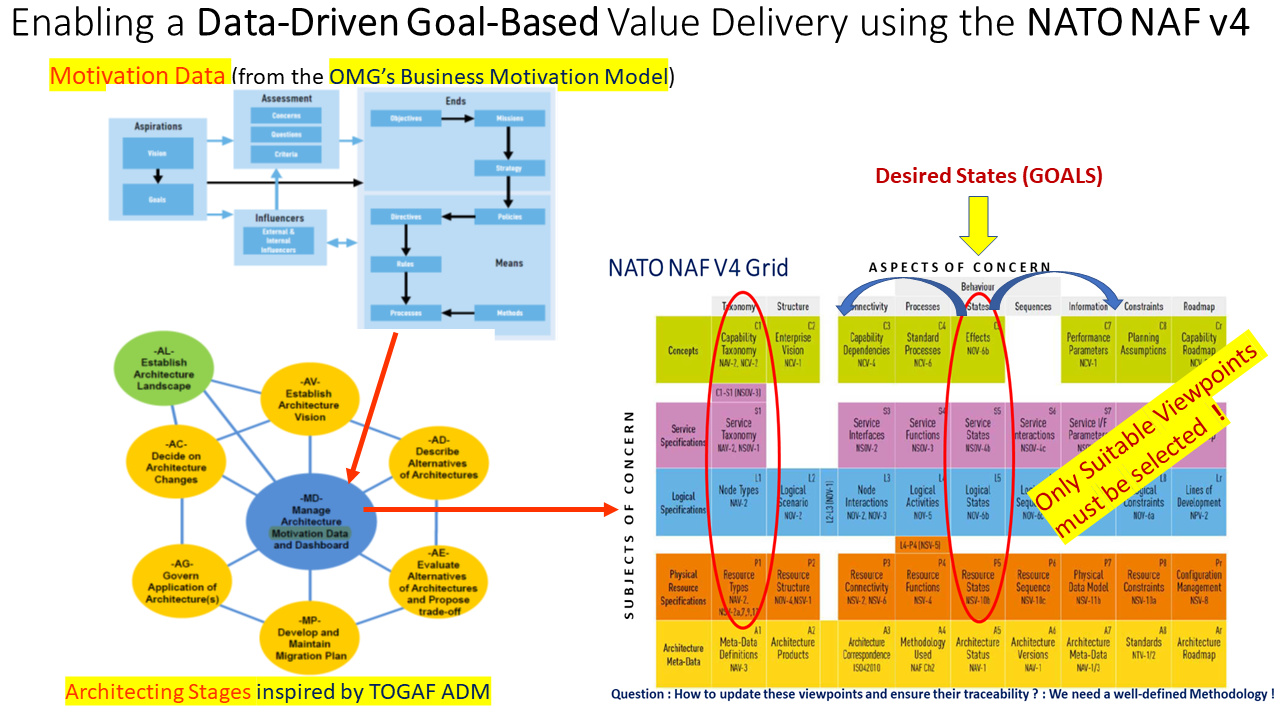 The 'NATO Architecture Framework (NAF 4.1)' is the latest version of the NAF Architecture Framework standard for developing and describing architectures for both military and business sides.
This new version of NAF is based on the OMG's UAF 1.2 Domain Meta-Model and the Open Group's ArchiMate 3.2 MetaModels.
Following an introduction to NAF v4 components here, we particularly focus in this 2nd part on the alignment of Capabilities, Services, Operations, Human and Physical Resources with the core elements of the OMG's Business Motivation Model (Drivers, Vision, Goals,...) and trace them through the UAF-enabled grid of viewpoints proposed by the NATO NAF v4 framework.
Read more last updated 26.08.2026
Enterprise Architectures : From Business Motivation Model (BMM) to SOA throughout TOGAF's MetaModel
Bridging Goals, Capabilities and Business Processes Toward IT Level SOA Components
 In the light of TOGAF's governance links to align SOA service components with changing strategies, the BMM - SOA bridge offers a Goal-Driven Architecture framework that helps companies to increase
their competitiveness
by synchronizing IT systems with evolutions of their goals and also capitalizing on their business capabilities.
In the light of TOGAF's governance links to align SOA service components with changing strategies, the BMM - SOA bridge offers a Goal-Driven Architecture framework that helps companies to increase
their competitiveness
by synchronizing IT systems with evolutions of their goals and also capitalizing on their business capabilities.
In this context, the framework provides links to establish between your business vision, goals, strategies, tactics as well as business rules and processes according to BMM, then presents bridges from these business specifications toward components of the Service Oriented Architecture (SOA) in order to align IT system components to your goals and directives...
Read more last updated 25.07.2020
How to align IT Architectures to Changing Strategies ?
Steps for increasing business agility by aligning IT to changes
IT systems that are developed only using use-case driven and object-oriented methodologies do not provide companies with good levels of agility in face of changes. This is because such methodologies structure systems only focusing on actor/system interactions hiding business requirements.
The resulting systems are difficult to align to change, since IT components are not designed on the basis of "business capabilities" (DNA of organizations) able to focus on goals and changing requirements that have to be propagated to impact system components in coherence.
Introduction : Why Use Case-Driven Approachs are unable to align IT systems to changes ?
Step 1 - Describe strategies and capabilities on the basis of business goals
Step 2 - Model business processes that realize business capabilities
Step 3 - Discover use cases that invoke services
Step 4 - Draft the backbone of the "Goal-Driven SOA"
Step 5 and 6 - Describe use case and service behaviours that have to be plugged onto the SOA backbone
Read more last updated 25.07.2013
Agile Enterprise Architectures : Six Patterns for Aligning IT to Changing Business Objectives
Patterns for succeeding with the Business / IT System Agility using TOGAF's ADM
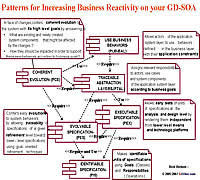
Along the enterprise architecture transformation processes using TOGAF's ADM, in order to avoid agility issues while adapting IT to changes, business and IT structures of the Enterprise Architecture Framework are to be rendered flexible as well as traceable in order to guarantee a coherent evolution in face of changes of the business requirements.
Two groups of patterns may help to achieve these objectives.
 The first group patterns confer flexibility to business and IT service specifications. They ensure identification, traceability and executability of business services.
The second group patterns configure services to closing the gap between the business and application layers in order to confer to the overall system a coherent evolution in face of changes.
 last updated 01.02.2015
Enterprise Architectures to Align SOA to Business Strategies (from EAUG 2013 - Extended Version)
Goal-Driven and Capability-Based Development using Archimate 2.0 within TOGAF ADM phases
This animated presentation is about the Open Group's TOGAF 9.1 and ArchiMate 2.0 standards. It illustrates on a short case study how to use the ArchiMate ® 2.0 throughout TOGAF® 9’ ADM phases in order to align SOA backbone components with changing business strategies and capabilities using Sparx EA.
Read more last updated 30.12.2013
Animated : Increasing Business Agility by aligning IT with your Business
An overview on how to align IT with the Business Architecture Views using the OMG's BMM, MDA and SoaML standards
This animated version of the "Goal-Driven Service Oriented Architecture" process illustrates on a short case study useful steps that allow companies to capitalize on their business capabilities and react coherently to changes.
Thanks to its reusable goal-driven business capability components - easily adaptable to changing strategies, the "Goal-Driven SOA" process aims at allowing companies to control execution of their business processes and underlying SOA services then adapt them efficiently to targeted situations...
Read more last updated 12.01.2013
Agile Modeling to deal with Changing Requirements
Introduction to the Goal-Driven Agile and Smart Modeling to succeed with Agile Methods
 Since a few years, companies try to customize Agile Methods ( Scrum, XP,...) in order to enhance delivery of their software products on time and budget. One of the serious obstacles they meet using such methods is due to informal and untraceable requirement gathering process that causes extra costs when dealing with changes !
Indeed, requirement gathering on the basis of user stories (or use case scenarios) is not sufficient alone to ensure coherent impact analysis in face of changes. This animated short case study presentation illustrates how requirements can be efficiently gathered, structured and assigned to system functions till the software architecture level components in order to better deal with changes.
Read more last updated 16.01.2015

The content of the goobiz.com website is licensed under a Creative Commons Attribution-ShareAlike 4.0 International License.
Exceptions to this license may apply for specific, attributed content and software code.