
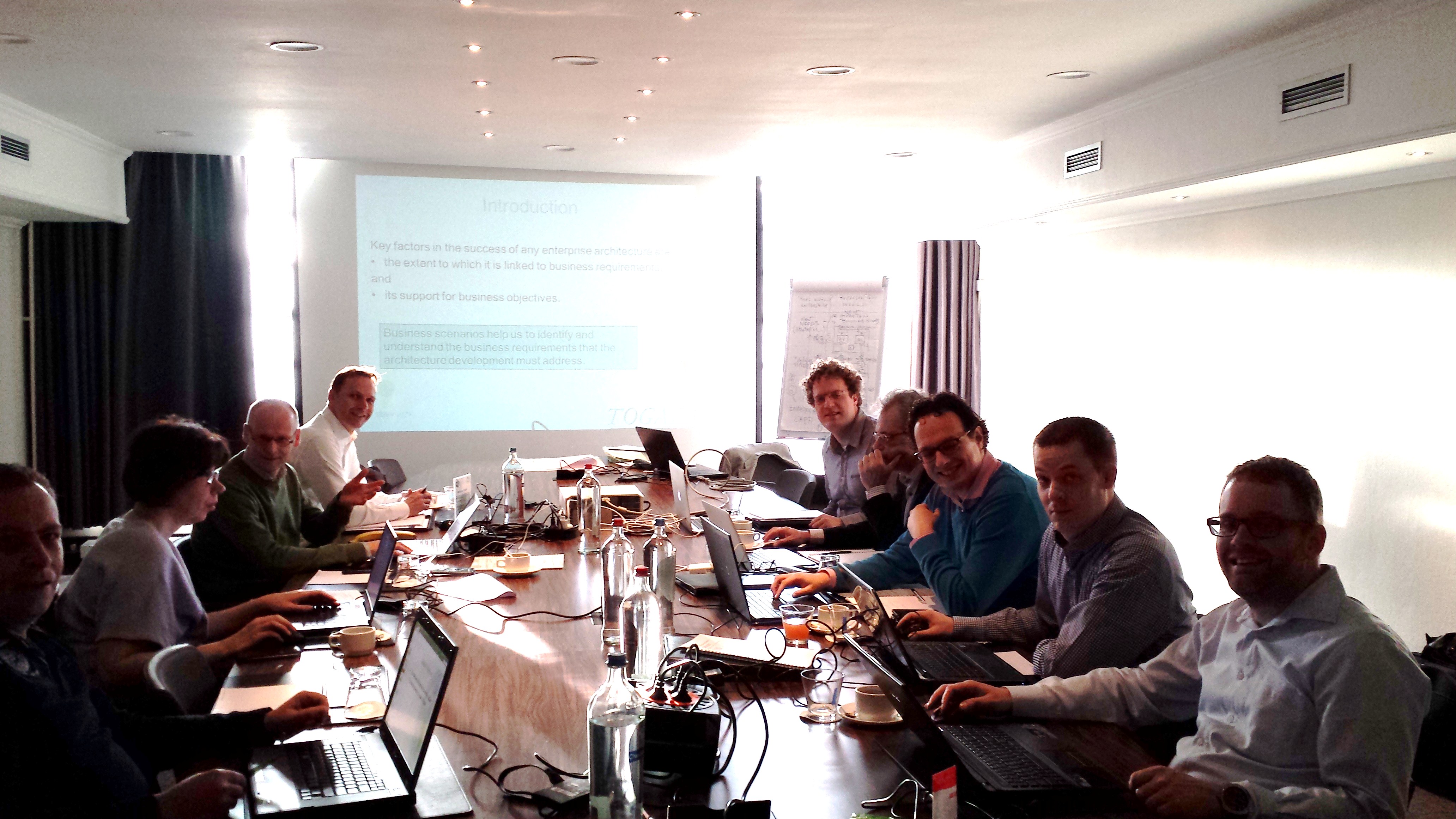
GooBiz is a consultancy and training company providing Digital Transformation & System Engineering servicesacross NA, EMEA and currenty all other locations including Asia-Pacific in distance training and consultancy
Contact mail : info@goobiz.com
 In addition to our training and mentoring services on the applications of these standards, we help you to customize these standards to align your organizational and IT structures with digital disruption.
Such a data-driven alignment allows you to bring regular improvement to your processes and confers a competitive reactivity to your organization.
Duration : 2 days online or on your site
for more info, please mail to :birol.berkem@goobiz.com
Agile Transformation - Building the Agile Enterprise using O-AA and TOGAF's ADM
Understanding the architectural elements of the Agile Enterprise and structuring them to "Sense Change and Act Rapidly and Decisively"
Duration : 2 days
Objective : Helping attendees understand the building blocks of the Agile Enterprise, how to structure and realize them to build a "Change Sensing and Rapidly Acting Agile Organization"
Prerequisites : None
Participant Profiles : CxO, Business Strategists, Enterprise Architects, Business Architects, System Architects, Business Analysts, System Analysts
The Agile Transformation approach considers the best practices in the Digital era including the 'Dual Transformation' Approach of the Open Agile Architecture (O-AA) and TOGAF standards' 10th edition from the Open Group.
Detailed Description :
• Definitions of the "The Agile / Digital Enterprise Open Agile Architecture O-AA (TM) standard"
• Definition of the "Change Sensing and Decisively Acting Agile Organization"
• The Building Blocks of the Agile Enterprise :
• Agile Strategy,
• The product / service it markets,
• The experience delivered to customers, employees and other stakeholders,
• The operating system of the Agile Enterprise to reach its goals,
• Organization and Governance,
• Boundaries of 'Data' and 'Value' entities,
• Feeding up the Strategy building block with the right data to enable strategic value creation and its delivery,
• Structuring the Agile Enterprise :
• Putting together the above building blocks to 'sense change and react swiftly and decisively'
• Complementing them with drivers to fuel the change, Value Propositions and the Value Streams,
• Steps of the Customer Journey to ensure customer feedbacks on offered values
• Putting The Agile Enterprise Structure at Work using TOGAF's ADM (10th Edition) :
Preliminary Phase (P) :
• Position the Agile Enterprise within its disruptive environment based on drivers, assessments, goal settings and value propositions,
• Define digital product offerings based on the market and customer needs, the customer journey mapping for their delivery,
Phase A :
• Develop a high-level vision of the business value and capabilities to be delivered by the Enterprise Architecture using Strategy and business motivation models,
• The Value Proposition Canvas to understand Value-Items to offer on the basis of Consumer gains and pains in realizing their job,
• Determine what should be the content of each value and in which step of the Customer Journey (CJ) it should be offered,
Phase A/B :
• Configure Stages of Value Streams to enhance customer's perception of the worth of product/services,
• Realign Value Delivery on the basis of Strategy Aligned Roles from the Customer Journey (CJ),
Phases B / C / D :
• Develop the Product and Service Architectures that are produced and operated by the Operation Architecture being directed by ‘Value Streams’ until their technical realization,
Phases E / F :
• Plan for continuously enhanced incremental delivery with Capabilities and assigned Resources of Product and the Operations Architectures,
Phase G :
• Develop Services of the Product Architecture by defining the Operational Context within which User Stories deliver Desired Values defined through Values Items,
Phase H :
• Manage the Change through 'Objectives and Key Result (OKR) based Data Feedbacks' captured at runtime from all drivers,
• Re-Route Insightful data feedbacks captured from drivers at run-time to Strategic 'Actionable Value Structures' that are awaiting such data in order to be activated
The elements described above to build an Agile Enterprise are illustrated step by step using the SparxSystems EA tool.
The Open Agile Architecture (O-AA), TOGAF and ArchiMate are respectively trademarks of the Open Group
IT4IT is a trademark for IT Reference Architectures from the Open Group,
The Business and Value Model Canvases are trademarks by Osterwalder and Pigneur